We are afraid of AI for the same reason we are afraid of flying.
There was a time I needed a glass of wine just to get on the plane. White knuckles on the armrest, reading the flight attendants' faces for the first sign that something was wrong. Then I would land, get in a car, and drive home from the airport without a single anxious thought, even though the drive was the part far more likely to kill me.
Fear was never built to read a spreadsheet. It is a survival instinct, tuned for a world of immediate, visible, physical danger. It is loud about what is sudden, new, and strange, and it goes quiet about what is familiar, even when the familiar thing is the one slowly doing us in. A psychologist named Paul Slovic spent his career proving this. What drives our sense of danger is not the odds. It is two feelings: dread, the sense that a thing is catastrophic and out of our control, and the unknown, the sense that it is new and strange. Score high on both and we treat it as terrifying, no matter what the math says.
AI lights up both. It is new. It is strange. It feels out of our hands. So we fear it, and because we fear it, we have built a whole genre of nightmares around it. The lost jobs. The killer machine. The missiles. The god that turns us into pets.
Meanwhile, look at the list of things we have decided to live with.
Nuclear weapons, still pointed at the heart of civilization. A pandemic we just lived through, even as global preparedness experts warn that the world is "not safer" and that risk is outpacing investment. A changing climate. Fragile food and water systems. More than a million people killed, worldwide, on roads every year, treated as the cost of getting around.
These dangers are enormous. But they are old. Familiar. Built into the background of modern life.
So we go numb.
The fear has worn smooth.
• • •
That same broken instrument does something worse than misrank our fears. It hides the real ones.
Here is an example almost no one is talking about. There is a freely available tool that can strip the safety guardrails off powerful open AI models in under ten minutes, on an ordinary laptop, with no special skill. More than a hundred experts across thirty countries have flagged it. Once those models are released, they cannot be recalled. This news does not trend, it does not go viral, because it is technical and undramatic. There is no romance in it. It is like sitting in a movie theater terrified by the monster on the screen, while nobody notices the theater has no security. The science-fiction nightmare gets our attention. The real vulnerability slips by because it is quiet and boring.
The open model risk is the danger of a tool escaping its guardrails. But the larger danger may run the other way. Not what happens when AI escapes our control, but what happens when it becomes the perfect instrument of control.
To see why, you have to know what AI actually is.
It is a mirror. Not in some mystical sense. I mean it plainly: AI is trained on us. On what we have written, argued, imagined, sold, hidden, confessed, and justified. Every method of persuasion we have ever devised is in there, because we are the ones who put it there.
The mirror does not want anything. It does not plot. It is an instrument that hands whoever holds it every technique humanity has ever used to move and manipulate people. It is also becoming the information layer we go to for what is true.
So picture that layer in the wrong hands. Not ideas banned, but edited. History rewritten so it delivers the lesson someone wants taught. Meaning controlled rather than defined, so the argument is settled before it begins. Whole realities built and handed to us as the obvious, neutral truth. You would not feel it happen. You would just feel informed.
In the 1920s, a man named Edward Bernays - the nephew of Sigmund Freud - took the new science of the mind and turned it into a method for moving crowds. He gave it a soft name, public relations, and a hard description in the title of his 1928 book: Propaganda. He argued that an invisible layer of persuaders quietly shapes what the public wants and believes. He proved it, too, famously convincing a generation of women to smoke by selling cigarettes as torches of freedom.
When the Nazis took power, Goebbels studied Bernays's work and used it to build the propaganda machine of the Third Reich. The same science, pointed at a different target. Bernays himself said any human tool can be used for good or misused for something monstrous. I guess he had seen what humanity looks like in the mirror.
The science Bernays helped bring into public life has only sharpened since, the way every science does. We understand attention, emotion, and belief far better now than he ever could. But every persuasion machine until this moment still needed humans to run it. Writers. Ad-men. Propagandists. Talking heads. AI is the first one that can generate the persuasion itself, endlessly, personalized to you specifically, at the scale of an entire population, for the price of electricity.
And the same systems are quietly becoming the layer we check reality against. We are starting to ask the machine what is true.
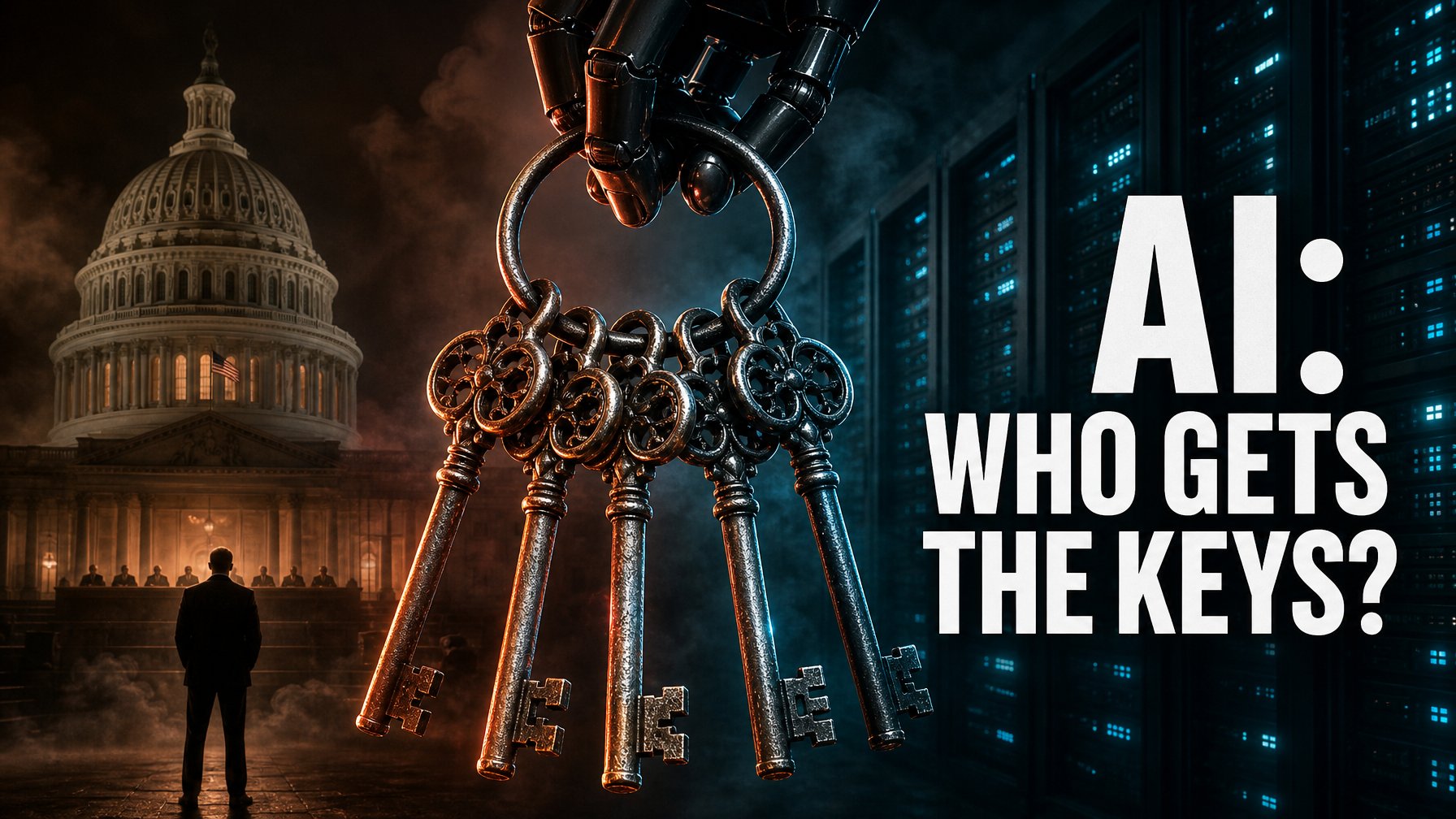
That is the part that should frighten us. If AI becomes the thing we consult to sort fact from fiction, then whoever controls that layer controls the floor we all stand on. Not by banning ideas. By shaping, quietly, which answers come back. A government, a party, a handful of companies, left or right, it does not matter. Whoever holds the keys does not need to ban reality. They only need to shape the version of reality that comes back when we ask.
And skepticism does not save you here. Doubt only works if there is somewhere independent to take it. If the fact-checker is the thing that has been captured, then the harder you do your own research, the deeper into the managed version you go. We could lose the habit of independent thought without ever noticing it leave, because the tool that replaced it will agree with us just enough to feel like our own mind.
We touched this once before, in the episode about who gets the keys to this technology. This is a real threat the headlines are not covering. We are staring at the killer robot. The real risk may be a search result that feels like the truth.
The fear should not be about an AI that wakes up and decides to rule us. The real fear is the living, breathing people already in an open struggle to take the keys. That struggle is not hidden. It is playing out in front of the entire world, right now.
• • •
But here is the other direction the mirror can point.
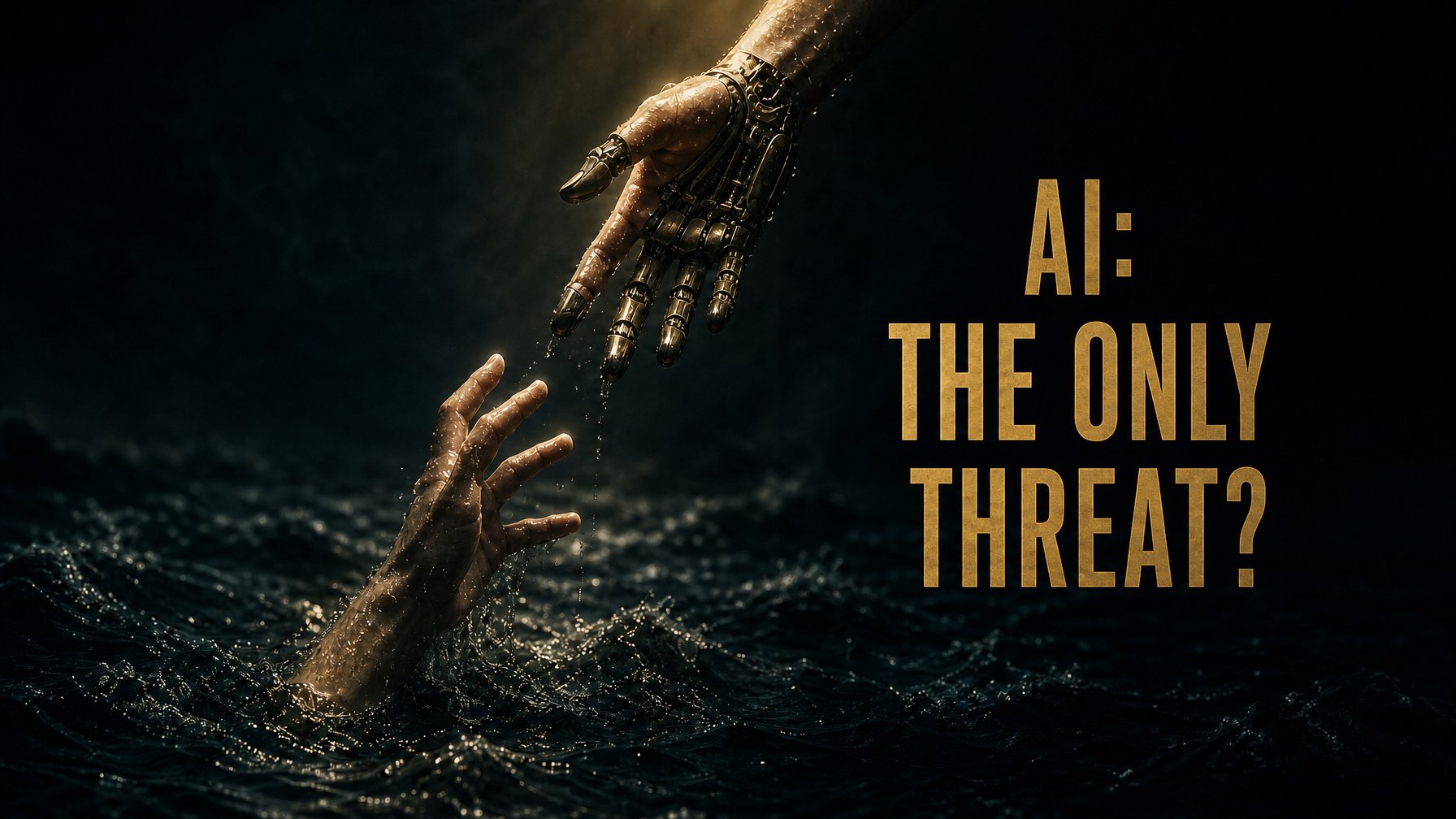
Of everything on the list of things we fear - nuclear weapons, pandemics, climate - AI is the only one that is also a tool. The others can only take. They destroy, they spread, they burn. AI arrived precisely when we are drowning in problems we cannot solve alone, and it is already reaching back.
A kid with a phone now holds a tutor, a translator, a research library, a second opinion. Knowledge that once sat locked behind institutions and credentials is suddenly, radically available. And in the lab, it is moving even faster. It mapped the shape of nearly every protein known to science, a problem that had stalled biology for fifty years. It is learning to hold fusion plasma steady. It is finding antibiotics for infections we had run out of ways to fight. It cracked a math problem that had stood open for decades. And it is catching pancreatic cancer on a scan years before a doctor can see it, which, for a family like mine, is not an abstraction.
• • •
So is AI the only threat? No. It may turn out to be the least of them and it's the only one that can help us with the rest.
The mirror holds all of it. Our genius for manipulation and our hunger for truth. The instinct to control and the need to break free. AI does not choose which half it amplifies. We do. The loop runs in whatever direction we point it, and then it compounds. That is the danger and the whole of the hope in a single sentence.
I started this channel arguing that the danger is us. I still believe that. What has changed is that I no longer think we have to face the danger alone. For the first time, we have a tool that could make our better instincts compound faster than our worst ones, if we can only choose to point it that way.
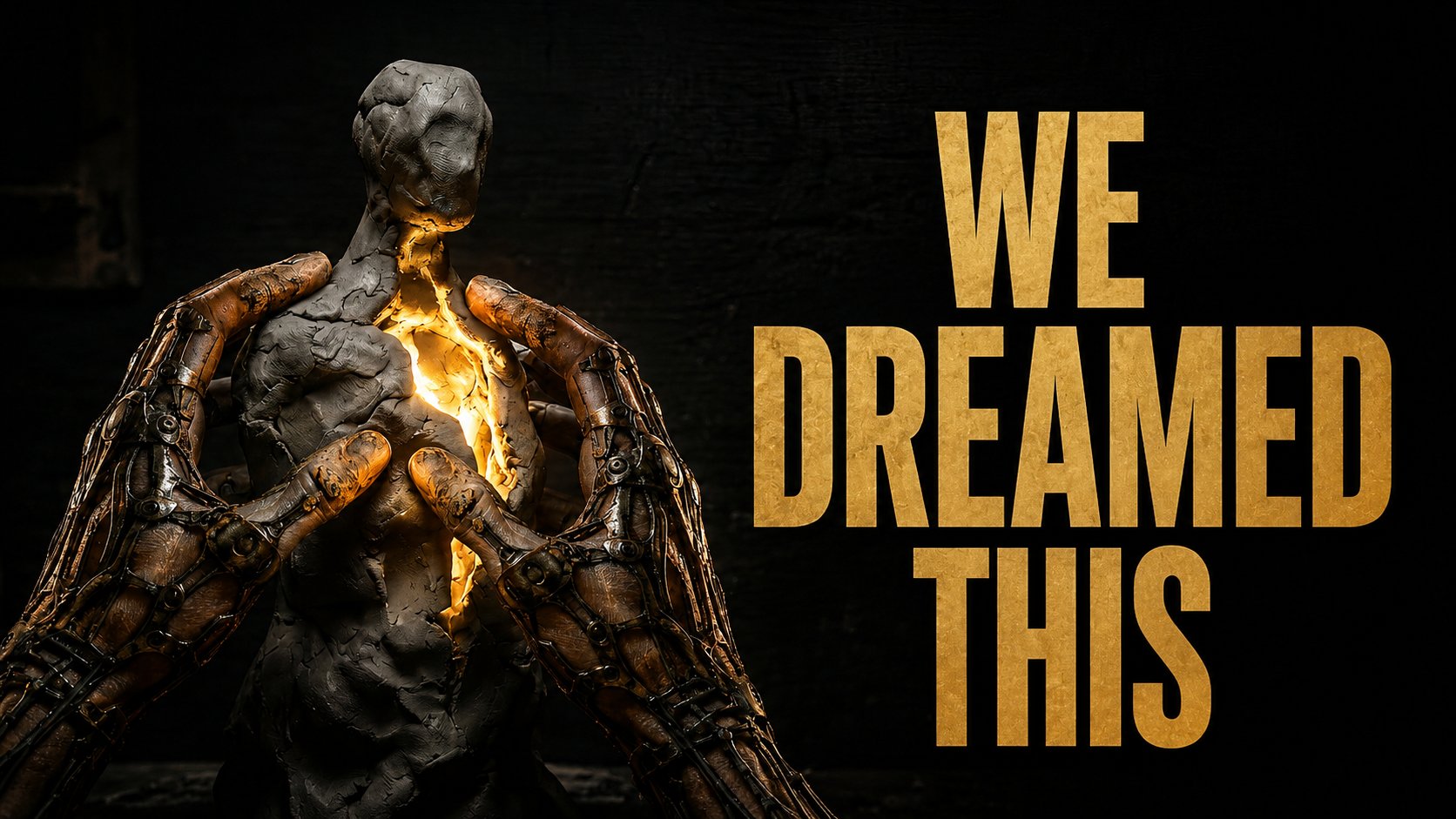
So maybe the question was never what AI will do to us. Maybe the question worth considering is what we hope it helps us become.